AnNa Maritime Single Window
AnNa Maritime Single Window was a European cooperation initiative focused on the development, harmonisation and implementation of Maritime Single Window solutions across participating countries.
The project brought together public authorities, maritime organisations and stakeholders with a common objective: to make ship reporting procedures more efficient, interoperable and easier to manage through electronic data exchange.
By supporting cooperation between national administrations and the maritime industry, AnNa contributed to the broader European effort to simplify reporting formalities for ships arriving at and departing from European ports.
Simplifying maritime reporting
Maritime transport depends on the timely exchange of large amounts of information between ships, ports, customs authorities, border agencies, safety organisations and other public administrations.
Traditionally, the same or similar information could be requested by several authorities through separate procedures. This created additional administrative work for ship operators and complicated the exchange of information between different national systems.
The Maritime Single Window concept was developed to address this challenge.
A Maritime Single Window provides a central electronic environment through which reporting parties can submit required information to the relevant authorities. Instead of communicating separately with multiple administrations, users can provide data through a coordinated system designed to distribute the information to the organisations that need it.
The AnNa project supported the development of this approach at national and European level.
Supporting cooperation across Europe
One of the central goals of AnNa was to improve cooperation between countries implementing their own National Maritime Single Windows.
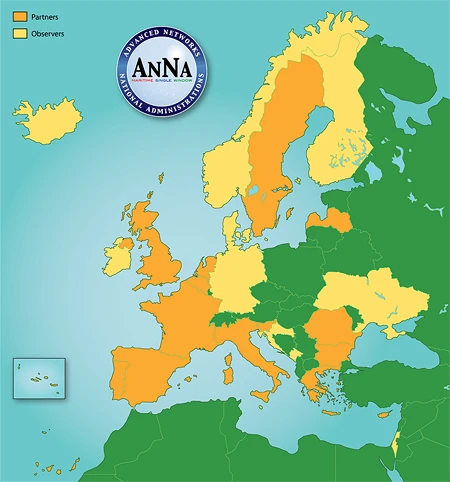
The project involved 14 partner countries and worked with additional observer countries and international organisations. This broad participation made it possible to compare national approaches, identify common requirements and examine how different systems could communicate more effectively.
Rather than imposing a single technical solution, the project recognised that each country had its own infrastructure, administrative structures and level of digital development.
The objective was therefore to establish common principles and improve interoperability while allowing countries to build on existing systems.
Connecting national systems
A Maritime Single Window does not operate in isolation.
It has to communicate with multiple national and international systems used for customs procedures, maritime safety, port operations, logistics and other administrative functions.
AnNa therefore placed significant emphasis on system integration and electronic data exchange.
The project explored how information submitted by shipping companies could move efficiently between users, national administrations and relevant European systems. This included examining functional requirements, technical interfaces and organisational processes necessary for reliable communication.
Improved interoperability can reduce duplication and help ensure that the same information does not need to be entered repeatedly into different systems.
Harmonisation and standardisation
Different reporting requirements and technical formats can create barriers for international maritime transport.
An important part of the AnNa project was therefore dedicated to identifying opportunities for harmonisation and standardisation.
Common requirements can make digital systems easier to connect and reduce complexity for shipping companies operating between different ports and countries.
The project examined national implementations, existing systems and proposed solutions in order to identify similarities, differences and areas where greater coordination could be achieved.
This work also contributed to discussions surrounding the implementation of EU Directive 2010/65/EU on reporting formalities for ships arriving in and departing from ports of the Member States.
Pilot projects and practical implementation
AnNa was not limited to theoretical analysis.
Participating countries developed and tested pilot projects focused on practical aspects of Maritime Single Window implementation.
These activities covered several parts of the reporting process, including electronic submission by reporting parties, national processing of information and data exchange between countries.
Pilot projects provided an opportunity to evaluate technical solutions, identify potential problems and determine whether proposed approaches could support efficient implementation in real operational environments.
The results helped inform recommendations and future development priorities.
A more connected maritime information environment
The long-term objective behind Maritime Single Window development extends beyond individual reporting systems.
Better data exchange can contribute to a more connected maritime and logistics environment in which information can move efficiently between ships, ports, authorities and other participants in the transport chain.
Such integration can support smoother administrative procedures, improve access to reliable information and create opportunities for more effective risk assessment and port operations.
It can also provide a foundation for future digital services in maritime transport.
Developing a common roadmap
A key outcome of the AnNa initiative was the development of common planning and implementation frameworks.
The project worked on Master Plans addressing both the immediate implementation of Maritime Single Window requirements and opportunities for longer-term cooperation.
These plans examined legal, organisational and technical challenges and identified areas where countries could continue working together.
The project also considered how Maritime Single Windows could evolve beyond basic regulatory compliance and become more closely connected to logistics platforms and other digital transport initiatives.
Cooperation between authorities and industry
Successful digitalisation of maritime reporting depends on more than technology.
Public administrations, ports, shipping companies, logistics providers and international organisations all have different responsibilities and operational requirements.
For this reason, stakeholder cooperation formed an important part of the AnNa approach.
Consultation and exchange of experience helped participating organisations better understand the practical needs of users while also considering legal and administrative requirements.
This collaborative model supported the development of solutions that could work across different institutional and technical environments.
Explore the AnNa project
The AnNa Maritime Single Window website provides access to information about the participating countries, project activities, meetings, deliverables, events and publications.
Visitors can explore the background of the initiative, learn about its objectives and review the work carried out by participating partners.
The project represents an important stage in the development of electronic maritime reporting in Europe and illustrates how international cooperation can support the transition from fragmented administrative processes toward more integrated digital systems.
Through harmonisation, pilot implementations, technical cooperation and stakeholder engagement, AnNa helped establish a foundation for the continued development of Maritime Single Window solutions and more efficient information exchange throughout the European maritime sector.